

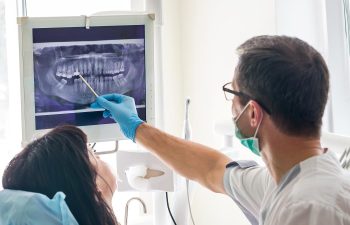
Knowing the various types of dental specialists will help you feel confident about your treatment plan and the professionals who are concerned with your care. Many patients at ORA 4X ask about the role of an oral surgeon, how their training differs from that of a general dentist, and when someone needs to see one. Whether you are preparing for wisdom teeth removal, considering dental implants, or navigating a more complex issue, knowing what an oral surgeon does can help you make informed choices about your oral health.
This guide describes what oral surgeons are trained to do, how they differ from general dentists, why referrals take place, and what to expect with oral surgery, including sedation options.
What is an Oral Surgeon? A Clear Oral Surgeon Definition
In simple terms, if you were to define an oral surgeon, the clearest explanation is that they specialize in surgical procedures involving the mouth, jaw, and facial structures.
An oral surgeon, also referred to more formally as an oral and maxillofacial surgeon, or OMS, is a dental specialist who is qualified to operate on the mouth, jaw, face, and related areas. Oral surgeons complete dental school and then pursue an extensive multi-year surgical residency that focuses on the complex medical and dental conditions.
Oral surgeons perform various procedures, from impacted wisdom teeth and jaw misalignment to facial trauma, cysts or tumors of the mouth, and even more advanced surgical procedures of the jawbone. They work closely with general dentists and other specialists to support patients whose needs go outside the realm of general dentistry.
What Does an Oral Surgeon Do?
When people ask, “What do oral surgeons do?,” the answer is that oral surgeons diagnose, treat, and surgically correct a wide range of conditions affecting the mouth, jaw, and facial structures.
Oral surgeons perform a variety of procedures, including:
- Extraction of teeth including impacted or severely damaged teeth, for example, complicated cases of wisdom teeth.
- Placement of dental implants, particularly for patients who require advanced surgical planning, bone reconstruction, or complex anatomical care.
- Corrective jaw (orthognathic) surgery, which repositions the misaligned jaw to improve function, comfort, and facial symmetry.
- Treatment of facial traumas, including jaw fractures, dental injuries, and soft-tissue damage
- Bone grafting and sinus lifts, which build bone structure for dental implant support
- Management of oral pathology, including the diagnosis and removal of cysts, tumors, and other suspicious lesions
- TMJ surgery, used in cases of advanced or severe temporomandibular joint disorders.
Their training enables them to carry out such procedures safely, along with anesthesia management and guiding the patient through the healing process.
Education and Training of an Oral Surgeon
To be an oral surgeon, a provider must complete:
- Dental school: a DDS or DMD degree
- A four- to six-year residency in oral and maxillofacial surgery
- Hospital-based surgical rotations include anesthesia, general surgery, and internal medicine.
- Board certification, provided through the American Board of Oral and Maxillofacial Surgery (ABOMS)
The additional training involved in their study separates them from general dentists. Their experience at the hospital gives them competence in complex surgical procedures, medically involved patients, and advanced anesthesia techniques.
What’s the Difference Between a Dentist and an Oral Surgeon?
So, what are oral surgeons vs. dentists? It’s a common question we get asked. General dentists can diagnose and treat all types of everyday oral needs, such as cleanings, fillings, crowns, and preventive care. A large number of dentists also receive advanced training in particular procedures. For instance, Dr. Devan Dalla is a highly trained dentist in the field of implantology and not an oral surgeon who specializes in dental implants, full-mouth reconstruction, and advanced restorative care.
By contrast, oral surgeons are surgical specialists whose training focuses on oral and maxillofacial surgery; they have greater background experience in the management of surgical risks, complex procedures, and anesthesia, including IV sedation and general anesthesia.
The procedures a dentist usually performs include:
- Routine care and restorative treatments
- Non-surgical dental procedures
- Basic extractions
- Preventive and cosmetic dentistry
Oral surgeons typically handle:
- Impacted wisdom teeth
- Jaw surgery
- Bone grafting and sinus lifts
- Complex implant cases
- Treatment of oral pathology
- Facial trauma
- Surgical procedures under deeper sedation
It is not uncommon for dentists and oral surgeons to collaborate in a course of care to provide comprehensive, coordinated treatment.
Why Would You Be Referred to an Oral Surgeon?
General dentists refer their patients to oral surgeons for:
- Complex tooth extractions, especially deeply impacted or angled wisdom teeth
- Insufficient bone for dental implants, requiring bone grafting or sinus elevation
- Alignment or functional problems with the jaws, including problems requiring corrective jaw surgery
- Oral pathology like cysts, tumors, or lesions needing surgical biopsy or removal
- Facial trauma, including fractures or other injuries to the jaw or teeth
- Clinical considerations: when patients have complicated medical histories or the potential need for deeper anesthesia or sedation
While ORA 4X focuses on full-mouth implants and high-level restorative care, there are cases that may need additional surgical support provided by oral surgeons with whom we work closely. For implant-focused solutions, many patients start with the ORA 4X Process to establish the most appropriate treatment plan.
Do They Put You to Sleep Before Oral Surgery?
Oral surgeons are trained to administer a variety of anesthesia options. Depending on the procedure and the patient’s needs, these may include:
- Local anesthesia, which numbs only the treatment area.
- Nitrous oxide: a mild sedative to help you relax.
- IV sedation is occasionally used for surgical procedures such as wisdom tooth extractions and implant placements.
- General anesthesia, usually reserved for hospital settings or significant reconstructive surgeries.
IV sedation is one of the most common choices for oral surgery because it keeps patients relaxed and comfortable. ORA 4X also offers IV sedation for implant procedures to help ensure a smooth experience for patients who feel anxious or prefer a deeper level of comfort.
Post-Operative Care by an Oral Surgeon
After your procedure, your oral surgeon will have a detailed list of instructions to help you recover comfortably. This might include:
- Tips on discomfort management
- Dietary recommendations
- Instructions on how to keep the surgical area clean
- Activity limitations
- Follow-up appointments to monitor healing
Recovery times do vary. Simple extractions may heal in a relatively short period of time, whereas other procedures, such as bone grafting or jaw surgery, may take longer. Oral surgeons continue managing your care to help ensure a safe and predictable recovery.
Finding a Qualified Oral Surgeon
When selecting an oral surgeon, consider:
- Board certification
- Experience with your particular procedure
- Anesthesia options offered
- Use of advanced imaging and technology
- Reputation and patient reviews
Not every dental implant case requires an oral surgeon. Many patients with one or multiple missing or failing teeth work directly with implant-focused dentists, such as the team at ORA 4X. To learn more about your dental implant solution options, visit our Dental Implants page.
Choose the Right Surgical Care for Your Needs with ORA 4X
Oral surgeons are important in the treatments of ailments related to the mouth, jaw, and facial structures. Whether it is wisdom tooth pain, trauma, or dental implant explorations, understanding their training and expertise empowers individuals in making decisions about their care.
At ORA 4X, we partner with trusted oral surgeons where additional surgical expertise is required. In such cases, patients seeking same-day full-arch implants or long-term restorative solutions will have a seamless channel to a confident and functional smile through our proprietary process.
You can explore the ORA 4X Process or reach out to us through our contact page to schedule your consultation and plan the path forward.
Posted on behalf of
2733 Elk Grove Blvd. Suite 160
Elk Grove, CA 95758
Phone: 916-975-1000
[email protected]
Monday: 7:30am – 5:00pm
Tuesday: 7:30am – 5:00pm
Wednesday: 7:30am – 5:00pm
Thursday: 7:30am – 5:00pm
Friday: 7:30am – 5:00pm
Saturday & Sunday: Closed